This is the supplied September 2026 report, including its caveats and source links. Its prices, vendor events and verification claims have not all been independently rechecked for this preview. Consult the original correction log alongside the chapters.
Creative, Coding & Automation AI Tools — Buyer's Research Brief
Research date: September 15, 2026. All prices in USD and verified against official pricing pages or 2026-dated secondary sources wherever possible. Prices that could not be confirmed against a live official source are listed explicitly at the end. AI pricing moves fast — re-check anything before publishing.
A framing note that runs through every category below: the useful distinction is no longer "does it have AI" but AI-native (the product would not exist without a model; the AI is the interface) versus AI-enhanced (an established product with model features bolted into an existing UI). AI-native tools tend to win on speed-to-first-draft and lose on control, governance and file fidelity. AI-enhanced tools are the reverse. Most buying mistakes come from picking the wrong side of that line for the job.
A. Presentations
Gamma is the category's commercial winner and the clearest AI-native example. You give it a prompt, a doc or a PDF, and it generates a deck, webpage or document as a stack of "cards." Pricing verified at roughly $12/month for Plus and $25/month for Pro on monthly billing, dropping to about $9 and $18 per month on annual billing; an Ultra tier sits near $100/month monthly or ~$90 annual, with Team at ~$20/seat/month (2-seat minimum) and Business at ~$40/seat/month (10-seat minimum). Two sources agree on the annual-equivalent figures, so treat the monthly list prices as the softer number. The free tier is unusually stingy in a specific way that trips people up: 400 AI credits are a one-time grant, not a monthly refresh, and free decks carry Gamma branding and cap at 10 cards per prompt. Paid tiers raise that to 20 (Plus), 50 (Pro) and 75 (Ultra) cards. Refunds are limited to a three-day window. Strengths: genuinely fast, the output is coherent rather than template-mush, and PPTX/PDF/Google Slides export works. Weaknesses: exported PowerPoint files are structurally awkward to hand-edit, the card metaphor fights you when you want precise layout, and credit burn is invisible until you hit the wall. Best for consultants, founders and marketers who need a decent deck in fifteen minutes and will present from Gamma's own viewer.
Tome is the cautionary tale of the category — though the details are murkier than the usual retelling. Tome raised $81.6M at a $300M valuation and reached roughly 20 million users in 18 months on under $4M ARR: people loved free AI slides and would not pay for them. It pivoted away from consumer presentations toward sales/marketing automation, and its founders left to build Lightfield, an AI-native CRM (VentureBeat, November 2025). Widely repeated claims that Tome "shut down in April 2025 and deleted user data" trace only to SEO/aggregator blogs and are not confirmed by any primary source — tome.app is live today as an AI sales platform still selling Basic/Professional/Enterprise tiers. The durable lesson stands regardless: free AI presentation tools are not automatically businesses.
Canva presentations is the AI-enhanced incumbent and, for most non-specialists, the correct answer. It rides on Canva's template library and brand kits, so the floor on visual quality is much higher than a from-scratch generator. Pricing is covered in section B.
PowerPoint Copilot requires a Microsoft 365 Copilot license and is the weakest AI story in Microsoft's own Office lineup. The honest finding from independent testing: Copilot in PowerPoint is a better editor than deck builder. Rewriting text for tone, generating images, adding speaker notes and translating text boxes all work well; generating a polished deck from scratch does not, and reviewers report that no tested tool produced output that was simultaneously visually polished and structurally editable. Microsoft's own engagement data reportedly shows PowerPoint well behind Word (~52%) and Excel (~67%). Rewrite doesn't handle tables, charts or non-text objects. Best for people who already live in PowerPoint and want faster editing, not for people hoping to skip deck-making.
Beautiful.ai is the design-guardrails play: "Smart Slides" auto-adjust layout as you add content, which prevents the classic ugly-deck failure mode. Official pricing is Pro at $45/month month-to-month or $14.50/month billed annually, and Team at $50/user/month or $40/user annually (2–20 users), with Enterprise custom. There is no free tier — only a 14-day trial that requires a card and auto-converts. AI features include unlimited generation, AI images, writing assistant and translation. Strengths: consistently professional output, real brand controls. Weaknesses: the constraint system is also a cage if you want something unusual, and the price gap between monthly and annual is punitive.
AI-native vs AI-enhanced: Gamma and Beautiful.ai are AI-native; Canva and PowerPoint Copilot are AI-enhanced. Verdict: Worth paying for if you make decks weekly. Gamma Pro (~$18/mo annual) for speed and volume; Canva Pro for design-safe output; skip PowerPoint Copilot unless your org already bought it for Excel and Word.
B. Design
Canva AI / Magic Studio is the broadest consumer design AI on the market. Official pricing: Free ($0, with roughly 20 premium AI uses), Pro at $144/year ($12/month), and Business at $250/person/year ($20.83/month), plus custom Enterprise. Canva now describes AI access as a shared allowance across three consumption tiers — Standard, Premium and Ultra — with Pro at "10x more AI than Free" and Business at "20x." One 2026 breakdown puts concrete numbers on it: Free at 200 Standard / 20 Premium uses per month, Pro at 2,000 / 200 / 20 Ultra, Business at 4,000 / 400 / 40. There is also an AI Pass add-on that multiplies the allowance (reportedly 40x for Pro, 20x for Business) but whose price is not publicly listed — it only appears at checkout, which is a genuine transparency problem. Image generation runs on Leonardo.Ai's Phoenix architecture following Canva's 2024 acquisition. Strengths: enormous asset library, brand kits, the shortest path from idea to acceptable artifact, and a free tier that is actually usable. Weaknesses: every failed generation still burns allowance, output is recognizably Canva, and pro designers hit the ceiling quickly. Best for small businesses, marketers, teachers and anyone without a designer.
Adobe Firefly has quietly become something more interesting than "Adobe's image model": it's now a multi-model aggregator. Official plans are Firefly Standard at $9.99/month (2,000 generative credits), Pro at $19.99 (4,000), Pro Plus at $49.99 list (10,000, promo-discounted to ~$34.97 first year) and Premium at $199.99 list (50,000, promo ~$139.91). A free daily-refreshing tier exists. Critically, subscribers get access to third-party models alongside Adobe's own — FLUX, GPT Image, Gemini/Nano Banana, Google Veo, Kling, Luma Ray, Runway and ElevenLabs audio. Strengths: commercially indemnified Adobe models for risk-averse enterprises, one bill for many models, deep Creative Cloud integration. Weaknesses: credit accounting across models is confusing, Adobe's own image model still lags the frontier on aesthetics, and the promo/list price split makes year-two budgeting a trap. Best for agencies and in-house teams that need legal cover and already pay Adobe.
Figma AI is AI-enhanced and deliberately conservative. Figma moved to a seat-based model: on Professional, a Full seat is about $16/month annually (Figma's page also shows $12/mo annual, $15 monthly for the older Professional line), Dev seats around $12 and Collab seats $3–5; Organization Full seats run ~$45–55 and Enterprise ~$90. AI credits are bundled by seat — roughly 500/month on free Starter, 3,000 on Professional Full, 3,500 on Organization and 4,250 on Enterprise. The headline feature is Figma Make, which turns a prompt or an existing prototype into working interactive code, with image generation partnered to Google Gemini and OpenAI. Figma Agent is in closed beta. Strengths: no context-switching, output lands inside real design systems. Weaknesses: credit limits are a live source of user complaints, generated code needs developer review, and most AI is gated behind paid seats.
Framer AI merges site design and hosting. Verified official pricing: Free ($0, 500 AI credits/month, available only when the workspace has no active subscription), Basic $10/month (1,000 credits), Pro $30/month (3,000 credits), Enterprise custom. Free includes a Framer subdomain, 1GB bandwidth, 10 CMS collections and up to 3 editors. Strengths: the fastest route from prompt to a live, genuinely well-designed marketing site; real CMS and SEO. Weaknesses: you're renting the platform, not owning portable code; credits vanish fast on iteration; not a general design tool.
AI-native vs AI-enhanced: Framer's AI layer and Firefly are AI-native; Canva and Figma are AI-enhanced. Verdict: Canva Pro at $12/month is the best value in this entire report for non-designers. Firefly is worth it only if you need indemnification or multi-model access in one bill. Figma AI isn't a reason to buy Figma — the design tool is. Framer Basic at $10 is worth it the moment you'd otherwise pay someone for a landing page.
C. Image & Video Creation
Midjourney remains the aesthetic leader and the most stubbornly un-businesslike product here. Current model is V8.2. Plans: Basic $10/month ($96/year), Standard $30 ($288), Pro $60 ($576), Mega $120 ($1,152), with fast GPU hours of 3.3 / 15 / 30 / 60 respectively. There is no free trial (discontinued March 2023). Standard and above get unlimited Relax-mode image generation; Pro and Mega add Stealth Mode and unlimited SD video. Pro is required for companies over $1M revenue. Unused fast hours don't roll over. Strengths: unmatched image quality and style control. Weaknesses: GPU-hour accounting is opaque, no real API story for most buyers, and the licensing terms trip up commercial users.
OpenAI image generation is bundled into ChatGPT rather than sold separately. Verified 2026 plan structure: Free $0, Go $8/month, Plus $20/month, Pro at $100/month (5x usage) or $200/month (20x usage), Business at $25/seat monthly or $20/seat annual, Enterprise custom. OpenAI's own pricing page names current models as GPT-5.6 Luna (free/Go default) and GPT-6 Astra plus GPT-5.6 on Plus and above. Image limits reported as roughly 2–3/day free, a couple dozen on Go, ~40–50 per 3-hour window on Plus, and effectively unlimited on Pro. Strengths: best-in-class prompt adherence and text rendering, and it's free-adjacent for casual use. Weaknesses: less stylistic range than Midjourney, and limits are tuned by OpenAI's compute rather than published contractually.
Runway has repositioned from "video model" to "production platform," and its official pricing is now among the clearest in AI video. Free: $0 with 125 one-time credits and 5GB storage. Standard: $15/month ($12 annual), 625 credits/month (~52 seconds of Gen-4.5 video), no watermarks, 4K upscaling. Pro: $35/month ($28 annual), 2,250 credits (~187 seconds), custom voice clone, 100GB. Max: $95/month ($76 annual), 9,500 credits with one-month rollover, HDR/ProRes output, 500GB. Like Firefly, Runway now hosts third-party models — Gen-4.5 and Aleph 2.0 alongside Seedance 2.5, Kling 3.0 and Nano Banana Pro. Strengths: the closest thing to a real editorial workflow; video-to-video and Aleph-style editing are differentiated. Weaknesses: seconds-per-dollar is brutal — Standard buys under a minute of finished video per month — and iteration multiplies that cost several times over.
Sora is free-to-try and hard to budget. The Sora app allows generation with limits tied to OpenAI's compute; ChatGPT Plus raises the allowance and Pro bundles Sora 2 Pro. API pricing is roughly $0.10/second at 720p (about $1 for a 10-second clip), with Pro tiers higher. Strengths: physics and audio coherence, plus a social distribution layer. Weaknesses: unpredictable consumer limits, and unresolved rights questions that make it awkward for commercial work.
Google Veo / Flow is the best-value bundle, verified against Google's own subscription page. Free includes Gemini 3.6 Flash and limited video. Google AI Plus is $4.99/month (2x limits, 200 Flow credits, 400GB). AI Pro is $19.99/month (4x limits, Gemini 3 Pro, 1,000 Flow credits, Jules coding agent, 5TB, YouTube Premium Lite). AI Ultra starts at $99.99/month (5x) or $199.99/month (20x), with 10,000–25,000 Flow credits, Deep Think and 20TB+. A Fast generation costs roughly 20 credits and a top-quality clip around 100, so AI Pro buys on the order of 50 fast clips a month. Strengths: Flow is a real filmmaking UI, not a prompt box; the bundle economics (storage + YouTube + Gemini) are hard to beat. Weaknesses: credits don't roll over, and the tier names change often enough that published comparisons go stale fast.
Pika is now a second-tier player. Annual-billed pricing: Free 80 credits, Standard $8/month (700 credits), Pro $28 (2,300), Fancy $76 (6,000); monthly runs ~20% higher. A 1080p 5-second video costs about 40 credits, and Standard does not include commercial rights or watermark-free downloads — that starts at Pro. Flagship model is Pika 2.5. Best for social-native creators doing effects-driven short clips; not a professional tool.
Kling (Kuaishou) competes on price-per-second. Free gives 66 daily credits that expire in 24 hours; Standard $10/month ($6.60 annual, 660 credits), Pro $37 ($24.42, 3,000), Premier $92 ($60.72, 8,000), Ultra $180 monthly-only (26,000). At 6–12 credits/second and a realistic 3–5 attempts per usable clip, Standard yields roughly five finished clips a month. Ideogram remains the specialist for text-in-image and typography work: Free gives 10 slow generations/week; Plus is ~$20/month ($15 annual, 1,000 priority credits), Pro ~$60 ($42, 3,500), Team ~$30/user ($20, 1,500). Credits don't roll over. For light users, Ideogram's API ($0.025–$0.10 per image) often beats a subscription.
AI-native vs AI-enhanced: All AI-native. The notable 2026 structural shift is aggregation — Firefly and Runway both now resell competitors' models, which means "which model" matters less than "which workflow." Verdict: Worth it, but buy the cheapest tier that clears your rights requirement and expect to overrun credits. Midjourney Standard ($30) for stills that need to look good; Google AI Pro ($19.99) is the best video-per-dollar; Runway Pro ($35) if video is actual client work; free tiers are fine for everyone else.
D. Audio & Voice
Descript is the text-based editor that made "edit audio by editing a transcript" mainstream, and it has layered an AI assistant (Underlord) on top. Official plans: Free ($0, 60 minutes of media/month, 100 one-time AI credits, 720p watermarked export, 5GB); Hobbyist (~$16/month annual, $24 monthly; 10 hours, 400 credits); Creator ($24 annual, $35 monthly; 30 hours, 800 credits, 4K export, voice clones, 1TB); Business ($50 annual, ~$65 monthly; 40 hours, 1,500 credits, 30+ language dub, avatars, 2TB); Enterprise custom with SOC 2 Type II. Note: the source page presented the monthly/annual figures in an order that appears inverted; treat the direction of the discount as verified but the exact monthly list prices as soft. Strengths: the fastest workflow in existence for podcast and talking-head video editing; filler-word removal and Studio Sound genuinely save hours. Weaknesses: media-hour caps bite hard on long-form, it gets sluggish on large projects, and Underlord is more assistant than agent.
ElevenLabs is the voice-synthesis standard and its pricing is transparent and cheap at the entry level. Official: Free $0 (10,000 credits/month, TTS/STT, sound effects, voice design, music, 3 Studio projects); Starter $6 (30,000 credits, commercial license, instant voice cloning, dubbing studio); Creator $22 list, currently $11 first month (121,000 credits, professional voice cloning); Pro $99 (600,000 credits, 44.1kHz PCM); Scale $299 (1.8M credits, 3 seats); Business $990 (6M credits, 10 seats, low-latency TTS ~5¢/minute); Enterprise custom with HIPAA BAAs. Strengths: best-in-class naturalness, huge language coverage, and it's now a full audio platform (music, dubbing, agents) rather than just TTS. Weaknesses: credit math is non-obvious across modalities, and voice-cloning consent/ethics remain a real operational risk for businesses.
Suno is the music generator, now on v6 / v6-wild, and it recently got cheaper. Official: Free $0 with 50 credits/day, no commercial rights and no downloads; Pro $8/month ($6.40 annual) with 2,500 credits, commercial rights, 20 downloads/month and 2 stem-separation types; Premier $24/month ($19.20 annual) with 10,000 credits, 60 downloads, Suno Studio with MIDI/effects and 3 stem types. Credits don't carry over. Strengths: shockingly usable for background music, ads and jingles. Weaknesses: the download caps are the real constraint, not credits, and ongoing litigation plus the Warner settlement make the rights picture worth watching before you build a business on it.
Adobe Podcast is the free utility everyone should know about. Enhance Speech (noise removal and voice clarity), Mic Check (real-time setup diagnostics) and Studio (browser-based remote recording) are browser-only at podcast.adobe.com. Free tier: 1 hour/day of Enhance Speech, 30-minute/500MB file cap, unlimited Mic Check, 2 Studio downloads/day. Premium is $9.99/month or $99.99/year: 4 hours/day, 2-hour/1GB files, batch upload, video support, unlimited Studio downloads. Strengths: the free tier solves a real problem in one click. Weaknesses: over-processing is common — reviewers describe it making voices "robotic, like you are a bad text-to-speech voice" — and it can't reliably separate multiple speakers on one track.
Whisper-based tools are the value floor of this category. OpenAI's Whisper is open-source, so a whole ecosystem of local apps (MacWhisper and similar) offers one-time-purchase or free transcription that runs entirely on-device — no per-minute fees, no cloud upload, and therefore no confidentiality problem. Against that, cloud services like Otter.ai charge monthly for meeting-bot convenience, live notes and collaboration. For anyone whose need is "turn this recording into text," a local Whisper app is usually the right answer and costs a fraction of a subscription; for anyone whose need is "join my meetings and summarize them," it isn't.
AI-native vs AI-enhanced: ElevenLabs and Suno are AI-native; Descript is AI-native in its original text-based-editing premise and AI-enhanced in its newer features; Adobe Podcast is a free AI-enhanced utility. Verdict: Best value ratio in the report. ElevenLabs Starter at $6 and Suno Pro at $8 are close to impulse purchases; Descript Creator (~$24/mo annual) pays for itself on the first edited episode; use Adobe Podcast free and a local Whisper app before paying anyone for cleanup or transcription.
E. Spreadsheets
This is where 2026's most measurable — and most sobering — data lives.
Excel Copilot now includes Agent Mode, generally available on Excel for Windows desktop (January 2026), Mac and web, requiring a Microsoft 365 Copilot license. It runs on OpenAI's reasoning models (Microsoft uses Anthropic models for the Word/PowerPoint Office Agent instead). There is also a COPILOT() worksheet function that puts model calls inside cells. The number everyone should quote: Agent Mode scores 57.2% on SpreadsheetBench versus a 71.3% human baseline — roughly 14 points short of a person. That's real progress and also a clear instruction to check the output. Strengths: it works on your actual workbooks, does pivot tables and conditional formatting natively, and is governed by your tenant. Weaknesses: the accuracy gap, and the licensing cost.
Microsoft 365 Copilot pricing changed in 2026. The baseline remains $30/user/month with annual commitment ($360/user/year), but a July 1, 2026 update reportedly introduced bundled SKUs — Business Standard + Copilot at $23.50/user/month, Business Premium + Copilot at $32, an E7 Frontier Suite at $99, and Copilot Business repriced to $21. Separately, Anthropic Claude models are now available inside Microsoft 365 Copilot, enabled by default for most commercial cloud customers but opt-in for EU/EFTA/UK tenants and unavailable in Federal GCC, GCC High, DoD and sovereign clouds. That regional split matters for any business reader.
Google Sheets Gemini is no longer an add-on. Since March 17, 2025 Gemini has been bundled into Workspace Business plans, with approximate annual per-user pricing of ~$7 (Starter), ~$14 (Standard), ~$22 (Plus) and custom Enterprise. In Sheets, Gemini builds templates and organizes data from plain-language commands. The structural weakness is a billing one: you pay for AI for everyone on the plan whether they use it or not — there's no per-user cost toggle.
Claude for Excel is the most interesting entrant. It's an Office add-in, generally available since around March 2026, included at no extra cost with all paid Claude plans — Pro $20/month ($17 annual), Max at $100 and $200, Team at $20/seat annual or $25 monthly (Premium seats $100/$125), Enterprise $20/seat plus API-rate usage. The free Claude tier does not include it. It runs on Excel for web, Windows (M365 build 16.0.13127.20296+), Mac (16.46+) and iPad (2.51+); not Android, not perpetual-license Excel 2016/2019. It understands multi-tab workbooks, preserves formulas while changing assumptions, builds financial models and debugs errors. Weaknesses reported in the field: Pro users hit usage limits within minutes on heavy modeling work, no VBA execution, and gaps in saved chat history and audit logging. Best for financial analysts — and it's the sharpest competitive pressure Microsoft faces inside its own app.
Rows was acquired by Superhuman (formerly Grammarly) in February 2026. Current pricing: Free ($0, 5 AI tasks/month, 500 cell-enrichment tasks, 10 integration accounts), Plus $8/user/month ($6 annual, 200 AI tasks), Pro $79 + $8/user ($59 + $6 annual, 1,000 AI tasks, per-minute automation), Enterprise custom. Its real differentiator was always live data integrations, not AI. Quadratic is the AI-native alternative built for analysts: Free ($0, limited AI), Pro $18/user/month annual or $20 monthly with $20/month in AI credits, Business $36 annual or $40 monthly with $40 credits, Enterprise custom with SSO and self-hosting. Quadratic's pitch is Python/SQL in a spreadsheet grid with AI writing the code — strong for data people, overkill for anyone who just wants formulas.
AI-native vs AI-enhanced: Quadratic and Rows are AI-native; Excel Copilot, Sheets Gemini and Claude for Excel are AI-enhanced (Claude for Excel being an AI-native model wrapped around an AI-enhanced surface). Verdict: For heavy Excel work, Claude Pro at $20/month is the highest-leverage $20 in this report — but budget for Max if you model daily. Microsoft 365 Copilot at $30/user only pays off for organizations that will use it across Excel, Word, Outlook and Teams; the 57.2% accuracy figure means you cannot yet remove the human reviewer.
F. Coding & Software Development
What the research actually shows
Start with the evidence, because this category is drowning in vendor claims.
METR's July 2025 randomized controlled trial found 16 experienced open-source developers were 19–20% slower with early-2025 AI tools on real tasks in their own repositories — while believing they had been about 20% faster. That gap between perceived and measured productivity is the single most important finding in AI tooling, and it is why self-reported time savings should be discounted heavily. METR's February 2026 post is frequently misreported as a retraction; it is not. Titled "We are Changing our Developer Productivity Experiment Design," it restates the original result and instead redesigns the ongoing experiment. Its newer August-2025-onward data shows an 18% speedup for returning developers (CI −38% to +9%) and 4% for newly recruited ones (CI −15% to +9%) — but METR explicitly discounts its own numbers, writing that the new experiment "gives us an unreliable signal" and amounts to "only very weak evidence," because developers increasingly refuse to participate rather than work without AI, making the estimate a lower bound. The responsible summary: AI coding tools measurably slowed experienced developers on mature codebases in early 2025; later data hints at a reversal, but by METR's own account it is not yet reliable evidence.
McKinsey (4,500 developers, 150 enterprises) found ~46% time reduction on routine coding and under 10% on complex engineering — the variance is the story. On quality, 2026 analyses report AI-generated code containing vulnerabilities at ~2.74x the human rate, CodeRabbit finding 1.7x more issues in AI code, and Opsera (250,000+ developers) finding time-to-PR down as much as 58% while AI-authored PRs waited 4.6x longer in review. Work moves out of writing and into reviewing.
JetBrains' 2026 Developer Ecosystem Survey (15,000+ developers) is the best adoption data available: 90% of professional developers use AI coding agents at work weekly and 68% daily. Tool share shifted dramatically during 2026 — Claude Code at 39% globally (up from 18% in January 2026), 47% in the US, and 31% naming it their primary tool; Codex at 16% (up from 3%, with awareness jumping 27%→65%); GitHub Copilot down to 21% from 29% year-over-year despite 79% awareness; Cursor at 12%, JetBrains AI 9%, OpenCode 7%, Google Antigravity 6%. JetBrains' own read: product quality now beats ecosystem lock-in.
The tools
Cursor is the AI-native IDE. Pricing: Hobby free (limited completions and agent requests), Pro $20/month ($20 of model usage), Pro+ $60, Ultra $200 ($400 of usage capacity), Teams $40/seat ($32 annual, with a Teams Premium tier around $120/$96), Enterprise custom, plus an India-only Start plan at ₹649. Cursor runs two usage pools: generous allowances for first-party models (Composer, and Grok) and metered API rates for Anthropic/OpenAI/Google models. Real spend ranges from $15–30/month for light use to $150–500+ for agent-heavy work. Strengths: the best editor-integrated agent experience; Composer is fast and cheap for routine work. Weaknesses: the pricing has changed repeatedly and confused customers, and costs are genuinely hard to predict.
GitHub Copilot has the cleanest plan structure in the category: Free ($0, 2,000 completions/month, 50 chat requests, access to smaller models); Pro $10/month (unlimited completions, $15 in monthly AI credits, cloud agent, code review, and notably third-party agent access to Claude Code and Codex); Pro+ $39 ($70 credits, premium models including Opus, audit logs); Max $100 ($200 credits, priority model access). Credits are priced at $0.01 each; completions never consume them. Strengths: unbeatable price-to-value at $10, works everywhere, enterprise governance. Weakness: it is losing mindshare fast — the 29%→21% decline is real.
Claude Code is the 2026 breakout. It's a terminal/IDE agent included with every paid Claude plan: Pro $20/month ($17 annual), Max at $100 and $200/month, Team $20/seat annual or $25 monthly (Premium seats $100/$125), Enterprise $20/seat plus API-rate usage. Free tier excluded. Strengths: strongest agentic multi-file work, excellent at large-codebase comprehension, and the adoption data shows developers migrating to it deliberately. Weaknesses: usage limits on Pro arrive quickly for real work — most serious users end up on Max, which reframes it as a $100–200/month tool, and the terminal-first interface isn't for everyone.
OpenAI Codex ships inside ChatGPT plans (Free through Pro $200, plus Business), and since April 2026 bills on token-based credits rather than task counts — input, cached input (about a tenth the cost) and output. A typical task burns roughly 5–45 credits. Direct API access runs around $1.75/M input and $14/M output for the Codex model, with the analysis suggesting API beats a Plus subscription below roughly 10–40 sessions/month. Plus at $20 is the practical default. Strengths: strong cloud-agent story, bundled with a subscription many people already have. Weakness: the credit meter makes cost forecasting hard.
Windsurf shows how fast this market reorganizes — and it is routinely misreported as a single deal when it was two. On July 11, 2025, after OpenAI's acquisition talks collapsed, Google hired CEO Varun Mohan and co-founder Douglas Chen in a ~$2.4B non-exclusive licensing and talent deal — Google did not buy Windsurf. Three days later, on July 14, 2025, Cognition (maker of Devin) acquired the rest: the IDE, the IP and trademark, the business (~$82M ARR, 350+ enterprise customers) and the remaining team, waiving vesting cliffs. Three weeks later Cognition offered staff exits. The product was not killed: Cognition shipped Devin Desktop on June 2, 2026 as "the next generation of Windsurf," fully backwards-compatible, and windsurf.com still serves Windsurf Editor content. The lesson is vendor-stability diligence, not that the tool vanished.
Replit is the browser-based agent-builds-and-deploys platform: Free (up to 30 hours of chat in Free Mode, up to 60 projects), Core $20/month ($18 annual) with $20 of model credit, Pro $100 ($90 annual) with $100 credit and 10 parallel agents, Enterprise custom. Lovable targets non-developers building real apps: Free ($0, 5 daily credits capped at 30/month), Pro $25/month ($21 annual, from 100 credits), Business $50 ($42 annual, adds SSO and data opt-out), Enterprise custom. Reported satisfaction is telling: ~85% for landing pages, ~80% for visual prototypes, ~25% for complex SaaS. v0 by Vercel: Free ($0 with $5 credits, 200 projects), Premium $20/month ($20 credits), Team $30/user, Business $100/user, Enterprise custom; credits don't roll over. Bolt.new: Free ($0, 1M tokens/month with a 300K daily cap), Pro $25/month (10M tokens), Teams $30/user, Enterprise custom, ~10% annual discount — and StackBlitz announced a Microsoft partnership in May 2026 putting Bolt on the Microsoft Marketplace (purchasable against Azure commitments), embedding it in M365 and allowing own-tenant Azure/AWS deployment. JetBrains AI: Free ($0, 3 credits/30 days), AI Pro $10/month (10 credits), AI Ultimate $30/month ($20 annual, 35 credits), Enterprise custom — where 1 credit = $1, Mellum code completion is unlimited and free on every tier, and BYOK via Junie CLI lets you bypass JetBrains credits entirely.
AI-native vs AI-enhanced: Cursor, Claude Code, Codex, Replit Agent, Lovable, v0 and Bolt are AI-native; GitHub Copilot and JetBrains AI are AI-enhanced. Verdict: Yes for professional developers, with eyes open. GitHub Copilot Pro at $10 is the safest starter; Claude Code (realistically Max, $100–200) is where the most capable agentic work happens; Cursor Pro at $20 suits editor-centric workflows. For non-developers, Lovable Pro at $25 or Bolt Pro at $25 are worth it for landing pages and prototypes and not worth it for production SaaS. Budget for longer code review, not shorter.
G. Automation & Workflow Orchestration
Zapier is the AI-enhanced incumbent and has split its AI into separately-priced products. Core platform: Free ($0, 100 tasks/month, Zaps + Tables + Forms, Copilot in beta); Professional from $19.99/month ($239.88/year, ~33% annual discount) with multi-step Zaps, unlimited premium apps, webhooks and AI fields; Team from $69/month with a shared task pool across 25 users and SAML SSO; Enterprise custom. Zapier Agents is priced separately: Free at 400 activities/month, Pro $33.33/month ($400/year) at 1,500 activities, Enterprise custom. Chatbots: Free (2 bots), Pro $13.33/month ($160/year, 5 bots), Advanced $66.67/month ($800/year, 20 bots). Strengths: ~8,000 app integrations, the shortest path for non-technical users, and Copilot genuinely helps build Zaps. Weaknesses: task-based pricing punishes high-volume workflows, and the multi-product AI pricing makes total cost hard to see.
Make is the visual-canvas competitor and the better value on raw throughput. Official: Free ($0, 1,000 credits/month, 2 active scenarios, 15-minute minimum interval), Core $12/month ($10.20 annual, 10,000 credits, unlimited scenarios, 1-minute intervals), Pro $21 ($17.85), Teams $38 (~$32.30), Enterprise custom — annual saves 15%+. AI features including Maia (conversational automation building), 350+ AI apps, Make AI Agents (beta) and an MCP server are available across plans. Strengths: far cheaper per operation than Zapier, and the visual canvas scales to genuinely complex logic. Weakness: a steeper learning curve, and operation-counting has its own gotchas.
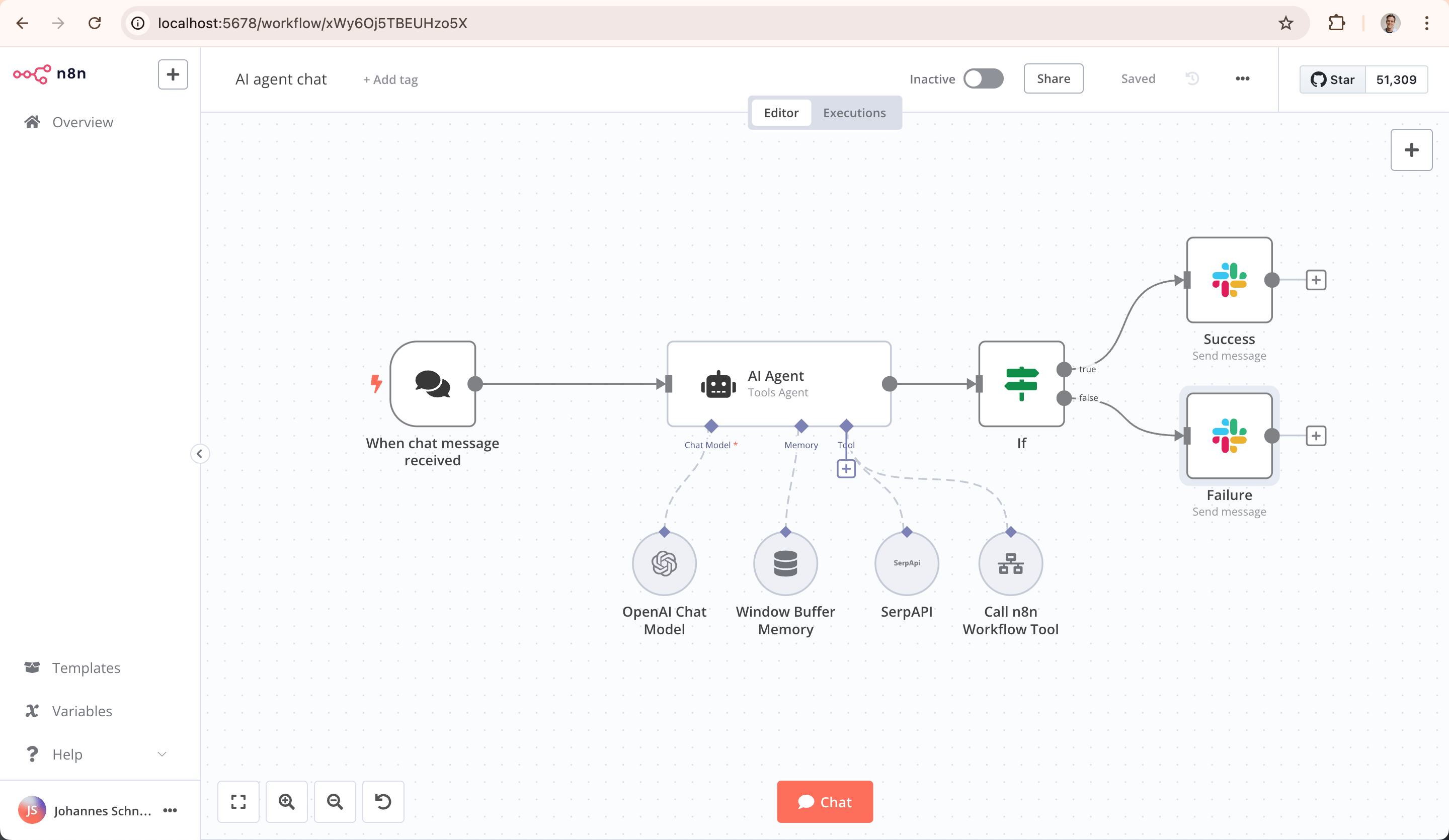
n8n is the category's breakout story. It raised a $180M Series C at a $2.5B valuation (Nvidia-backed), and 2026 secondary sources report a subsequent $5.2B valuation with ARR estimates ranging from ~$40M to $100M+ — the range itself is a signal that these are estimates, not disclosures. Cloud pricing (annual): Starter €20/month (2,500 executions, 5 concurrent), Pro €50 (10,000 executions, 20 concurrent), Business €667 (40,000 executions, SSO/SAML/LDAP, self-hosted option), Enterprise custom, with a 50% Business discount for startups under 20 employees. The Community Edition is free and self-hostable (200,000+ GitHub stars). The decisive difference: n8n charges per complete workflow execution regardless of how many steps it contains, where Zapier charges per task. For multi-step AI workflows that's an order-of-magnitude cost difference. Strengths: self-hosting means data never leaves your infrastructure, native code nodes, best-in-class AI/agent primitives. Weaknesses: it is a developer tool wearing a no-code costume, and note that n8n is fair-code licensed, not true open source — commercial restrictions apply.
Lindy is the AI-native agent builder: Plus $29.99/user/month (3,000 credits), Pro $99.99 (15,000), Max $199.99 (35,000), Enterprise custom. Credits pool across the team, refresh monthly and don't roll over; everyday tasks cost 2–250 credits, deep work 250–1,000, complex projects 1,000–2,500. There's no true free tier — a 7-day trial applies only to members joining via Slack. Gumloop starts at $37/month (20,000 credits, unlimited agents and seats, 35+ models, BYO API keys, 5 concurrent workflow runs) with a 14-day trial, plus custom Enterprise. Both are genuinely AI-first — you describe an outcome rather than wiring triggers — but both are expensive relative to n8n for comparable volume.
Power Automate is the enterprise-governance option: a 30-day free trial, Premium at $15/user/month (paid yearly; cloud flows, attended RPA, process mining with 50MB), Process at $150/bot/month (unattended desktop flows), Hosted Process at $215/bot/month, with a Process Mining add-on at $5,000/tenant/month and Copilot Studio sold as pre-purchased Copilot Credit Commit Units. Worth it only if you're already deep in Microsoft licensing and need RPA plus tenant-level governance; the credit and connector licensing model is notoriously complicated.
AI-native vs AI-enhanced: Lindy and Gumloop are AI-native; Zapier, Make, n8n and Power Automate are AI-enhanced (n8n being the most aggressively AI-forward of them). Verdict: Worth it, and this is the category where the paid tier most obviously pays for itself in hours. Make Core at $12/month is the best general value; n8n (free self-hosted, or €20 Starter) is the right answer for anyone technical or handling sensitive data; Zapier Professional at ~$20 is worth the premium only for non-technical users who need the integration breadth; Lindy and Gumloop only once an agent is replacing meaningful human hours.
Cross-cutting observations worth putting in front of readers
- Aggregation is the 2026 pattern. Adobe Firefly and Runway both now resell competitors' models. The question shifted from "whose model" to "whose workflow and whose bill."
- Credits are the new pricing trap, everywhere. Gamma, Canva, Figma, Framer, Runway, Lovable, Cursor, JetBrains and Lindy all meter in units whose consumption rate is invisible until you overrun. Every failed generation costs money. Assume 2–5x your naive estimate.
- The measured productivity story is genuinely ambiguous, and honest coverage should say so. METR's own 2026 update undermines confident claims in both directions.
- Consolidation risk is real. Tome abandoned its consumer product after 20M users. Windsurf was split between two acquirers in 72 hours. Rows was acquired by Superhuman in February 2026. Check vendor viability before standardizing a team on any AI startup.
- Free tiers have quietly gotten worse in presentations and image generation (one-time credits, watermarks, no commercial rights) and better in audio and coding (ElevenLabs, Adobe Podcast, GitHub Copilot Free, n8n Community).
Sources
- https://gamma.app/pricing
- https://www.eesel.ai/blog/gamma-pricing
- https://www.presentations.ai/blog/gamma-pricing
- https://costbench.com/software/ai-presentations/gamma/
- https://deckary.com/blog/tome-review
- https://www.beautiful.ai/pricing
- https://www.canva.com/pricing/
- https://www.eesel.ai/blog/canva-ai-pricing
- https://windows.gadgethacks.com/news/microsoft-copilot-in-powerpoint-better-editor-than-deck-builder/
- https://www.epcgroup.net/microsoft-365-copilot-pricing-licensing-enterprise-guide-2026
- https://learn.microsoft.com/en-us/microsoft-365/copilot/connect-to-ai-subprocessor
- https://www.adobe.com/products/firefly/plans.html
- https://www.figma.com/pricing/
- https://www.banani.co/blog/figma-pricing-and-credits
- https://www.toolworthy.ai/tool/figma-ai
- https://www.framer.com/pricing/
- https://www.midjourney.com/plans
- https://www.eesel.ai/blog/midjourney-pricing
- https://chatgpt.com/pricing/
- https://www.cloudzero.com/blog/how-much-does-chatgpt-cost/
- https://runway.com/pricing
- https://www.eesel.ai/blog/sora-2-pricing
- https://gemini.google/subscriptions/
- https://costgoat.com/pricing/google-flow
- https://the-decoder.com/google-overhauls-its-ai-subscriptions-at-i-o-2026-with-three-tiers-starting-at-10-a-month/
- https://www.eesel.ai/blog/pika-ai-pricing
- https://www.eesel.ai/blog/kling-ai-pricing
- https://www.eesel.ai/blog/ideogram-pricing
- https://www.descript.com/pricing
- https://elevenlabs.io/pricing
- https://suno.com/pricing
- https://thepodcastconsultant.com/blog/adobe-podcast-ai-tools-everything-you-need-to-know
- https://guptadeepak.com/tools/top-5-ai-transcription-tools-2026/
- https://techcommunity.microsoft.com/blog/excelblog/agent-mode-in-excel-is-now-generally-available-on-desktop/4457408
- https://futurumgroup.com/insights/is-microsoft-365-copilot-agent-mode-ready-to-rival-human-accuracy/
- https://www.eesel.ai/blog/gemini-workspace-pricing
- https://aitoolsreview.co.uk/insights/claude-for-excel
- https://claude.com/pricing
- https://rows.com/pricing
- https://blog.superhuman.com/superhuman-to-acquire-rows/
- https://www.quadratichq.com/pricing
- https://metr.org/blog/2026-02-24-uplift-update/
- https://metr.org/blog/2025-07-10-early-2025-ai-experienced-os-dev-study/
- https://valueaddvc.com/blog/ai-coding-productivity-study-data-what-metr-mckinsey-and-github-actually-found-in-2026
- https://blog.jetbrains.com/research/2026/08/ai-coding-agent-adoption-2026/
- https://blog.jetbrains.com/research/2026/04/which-ai-coding-tools-do-developers-actually-use-at-work/
- https://www.cloudzero.com/blog/cursor-ai-pricing/
- https://github.com/features/copilot/plans
- https://www.cloudzero.com/blog/openai-codex-pricing/
- https://www.cnbc.com/2025/07/14/cognition-to-buy-ai-startup-windsurf-days-after-google-poached-ceo.html
- https://techcrunch.com/2025/08/05/three-weeks-after-acquiring-windsurf-cognition-offers-staff-the-exit-door/
- https://replit.com/pricing
- https://www.eesel.ai/blog/lovable-pricing
- https://www.nocode.mba/articles/v0-pricing
- https://aiunpacking.com/review/bolt-new/
- https://altaitools.com/jetbrains-ai-pricing/
- https://zapier.com/pricing
- https://www.make.com/en/pricing
- https://n8n.io/pricing/
- https://pitchbook.com/news/articles/ai-agent-startup-n8n-lands-2-5b-valuation-with-180m-series-c
- https://valueaddvc.com/blog/n8n-valuation-2026-5-2b-40m-arr-and-how-it-compares-to-zapier-and-make
- https://www.lindy.ai/pricing
- https://www.gumloop.com/pricing
- https://www.microsoft.com/en-us/power-platform/products/power-automate/pricing
Could NOT verify against a current official source
Flagged honestly — do not publish these as fact without a second check.
- Gamma's exact monthly list prices. Gamma's own pricing page renders prices client-side and returned no numbers. Three secondary sources disagree: $12/$25/$100 monthly vs $10/$20/$100 vs $9/$18/$90. Two independently agree on the annual-equivalent figures (~$9 / ~$18 / ~$90 per month), so those are the more reliable numbers.
- Descript's monthly vs annual price direction. The official page extraction showed Hobbyist at "$16 monthly / $24 annual," which is inverted from how discounts normally work. The tier structure, media hours and credits are verified; the exact monthly list prices are not.
- ChatGPT Go, Plus and Pro exact prices. chatgpt.com/pricing showed plan names, features and model names (GPT-5.6 Luna, GPT-6 Astra) but no dollar figures. The $8 / $20 / $100 / $200 structure comes from a September 2026 secondary source only.
- Microsoft 365 Copilot's July 1, 2026 SKU changes (Business Standard + Copilot $23.50, Business Premium + Copilot $32, E7 Frontier $99, Copilot Business $21). Single secondary source; Microsoft's own pricing pages returned 404s during research. The $30/user/month baseline is widely corroborated.
- Canva AI Pass price. Canva does not publish it; it appears only at checkout after login. The 40x (Pro) / 20x (Business) multipliers come from one secondary source.
- Cursor Pro+ ($60) and Ultra ($200) prices. Cursor's own pricing page did not render them; one 2026 secondary source names them and another explicitly says "verify live page."
- Claude Max tier separation. claude.com/pricing showed both Max 5x and Max 20x as "from $100/month." The widely-reported $100 / $200 split is not confirmed by that page's extraction.
- n8n's $5.2B valuation and ARR figures. The $180M Series C at $2.5B is well sourced. The later $5.2B valuation and ARR estimates ($40M–$100M+) come from data-aggregator sites, not company disclosure.
- Specific Anthropic model version names inside Microsoft 365 Copilot. The Microsoft Learn extraction returned model names I could not corroborate and have therefore omitted. The fact of Claude availability and the regional opt-in split is verified.
- Figma Professional seat pricing. Figma's own page returned $12/mo annual and $15/mo monthly for "Professional"; a secondary source gives $16/mo annual for a Professional Full seat. These are likely different seat types, but I could not confirm the mapping from an official source.
- Google AI Plus price. Google's official subscription page shows $4.99/month; a May 2026 the-decoder report of the I/O announcement says $7.99. I have used the official figure, but the discrepancy is unexplained (possibly regional or a post-launch change).
- Excel Agent Mode SpreadsheetBench figure provenance. The 57.2% vs 71.3% human numbers come from a credible analyst source (Futurum, October 2025) rather than Microsoft's own blog, which did not render. The figure may also be stale relative to 2026 model updates.
- Whisper-based tool pricing. I verified the category's structure (open-source Whisper, one-time-purchase local apps vs subscription cloud services) but did not verify individual app prices such as MacWhisper or Otter.ai against official pages.
Related interface examples
These publisher images illustrate products in this workflow category. They are supplemental to the archived report, not screenshots from our own testing.