This is the supplied September 2026 report, including its caveats and source links. Its prices, vendor events and verification claims have not all been independently rechecked for this preview. Consult the original correction log alongside the chapters.
AI Assistants, Research Tools & Knowledge Management — Buyer's Landscape, September 2026
Researched 15 September 2026. Every price below was checked against a vendor pricing page or a source dated 2026 wherever possible. Prices that could not be confirmed against a current source are listed explicitly at the end — treat those as directional, not quotable.
A methodological warning worth stating up front: this market re-prices itself roughly every quarter, and several vendors have restructured in ways that break older comparisons entirely. In the past twelve months Copilot Pro was killed and replaced by Microsoft 365 Premium; Notion retired its separate AI add-on and folded AI into the base plans; Coda was absorbed into Superhuman (itself the rebranded Grammarly); Google renamed NotebookLM to Gemini Notebook and moved it to a compute-quota model on 2 September 2026; and OpenAI paused new signups for its $200 Pro tier on 10 September 2026. Any guide written before mid-2026 is wrong about at least three of those.
A. General AI assistants
ChatGPT (OpenAI) — AI-native
ChatGPT remains the default consumer assistant and the broadest product surface. The current flagship is GPT-6 "Astra", with the GPT-5.6 family (marketed with codenames like Luna, Terra and Sol for different speed/reasoning points) doing the volume work on cheaper tiers. The API rate for Astra is $10 per million input tokens and $50 per million output, with cached input at $1.00/M and Batch/Flex service tiers at half rate.
Pricing. Free is $0. Go is $8/month and is notable for being the first ChatGPT tier that OpenAI describes as potentially ad-supported — a meaningful change in the product's character. Plus is $20/month and is the tier where GPT-6 Astra, Projects, scheduled tasks, custom GPTs and expanded Codex access begin. Pro starts at $100/month; the $200 Pro tier was paused to new subscribers on 10 September 2026, with existing subscriptions unaffected. On the business side, OpenAI's own FAQ gives ChatGPT Business at $25/seat/month monthly or $20/seat/month annual for Standard seats, and $125/$100 for Premium seats, with a two-seat minimum and a 200-seat cap per workspace. Premium seats get roughly 5x the usage and escape the five-hour rolling window that constrains Standard seats. Enterprise is custom-quoted.
Free tier limits. Unlimited text chat subject to abuse guardrails, but limited uploads, limited image generation, limited voice and limited deep research. Roughly 3 file uploads per day. Astra is not available on Free at all.
Platforms. Web, macOS and Windows desktop apps, iOS and Android, plus a full API and the Codex CLI/agent surface.
Strengths. The largest tool surface of any assistant — deep research, agent mode, image and video generation, code execution, scheduled tasks, custom GPTs — and the most mature third-party ecosystem. File handling is the most generous of the majors at up to 512MB per file. Deep research produces the longest, most heavily cited reports of the field.
Real weaknesses. Model naming is now genuinely confusing, with four or five variants visible at once and different tiers exposing different ones. The tier ladder has become steep and opaque: the gap between $20 and $100 is large, and the $200 tier being closed to new users mid-September leaves the top of the ladder ambiguous. Deep research is the slowest of the majors (10–30 minutes typical) and over-cites, which buries the actual finding. Ads on the Go tier are a new and unwelcome pattern.
Best for. Generalists who want one subscription that does the most things, and small teams who want business controls without a sales conversation. Verdict: Plus at $20 is the single best-value paid AI subscription for most individuals; Pro at $100+ is only defensible if you run deep research or agent jobs daily.
Claude (Anthropic) — AI-native
Claude's current model lineup, per Anthropic's platform docs, is Claude Fable 5.1 (flagship, $10/$50 per million tokens, 1M context, 128K max output, always-on adaptive thinking, June 2026 knowledge cutoff), Claude Opus 5 ($5/$25, 1M context), Claude Sonnet 5 ($2/$10, 1M context) and Claude Haiku 4.5 ($1/$5, 200K context). Anthropic's own guidance is to start with Opus 5 and only reach for Fable 5.1 if Opus falls short — an unusually honest piece of self-deprecation from a pricing page.
Pricing. Free is $0 (Sonnet and Haiku, web search, memory, code execution, connectors). Pro is $20/month monthly or $17/month billed annually, adding Opus, Claude Code, Claude Cowork, Claude Design, Claude Science, Projects, Research and the Microsoft 365 integration, at roughly 5x Free's usage per five-hour session. Max starts at $100/month for 5x Pro usage, with a 20x option at $200. Team is $25/seat/month monthly or $20 annual for Standard seats, and $125/$100 for Premium seats (5x standard usage) — near-identical to ChatGPT Business, which is not a coincidence. Enterprise is $20/seat/month billed annually plus usage at API rates, with SCIM, audit logs, custom retention and role-based access.
Platforms. Web, macOS/Windows desktop, iOS and Android, a full API, plus Claude Code (terminal/IDE) and Cowork, which since 7 July 2026 runs on web and mobile with remote sessions rather than desktop-only.
Recent capability shipping has been rapid: memory that works across chat and Cowork with editable topics and a sensitive-topics setting (25 August), Smart Reports for Enterprise usage analytics (10 September), Slack tagging for Teams/Enterprise (23 June), computer use for Pro/Max (23 March), and Claude Design for visual outputs (17 April).
Strengths. Best-in-class reasoning over documents you supply, and the strongest synthesis when sources contradict each other. The 1M-token context on three of four models makes long-document work genuinely practical rather than a demo. Writing quality is the field's benchmark. The Enterprise pricing model — a low $20 seat plus metered usage — is the most honest structure on the market for organisations with uneven usage.
Real weaknesses. Deep research retrieves fewer sources than competitors (20–100 vs ChatGPT's 50–200) and costs more per query. File uploads cap at 30MB, with 5 files per chat on Free and 20 on Pro/Max, and PDFs get full analysis up to roughly 100 pages — tighter than ChatGPT or Gemini. No native image generation. Usage limits on Pro bite for heavy users in a way that pushes people to the $100 Max tier faster than they expect.
Best for. Knowledge workers who write, analyse documents, or code for a living. Verdict: Pro at $20 is worth it if you work with text all day; Max is worth it only if you're hitting limits weekly, which power users genuinely do.
Gemini (Google) — AI-native, distributed through AI-enhanced surfaces
Google's current lineup per DeepMind's model pages is Gemini 3.8 Flash (agentic work at scale), Gemini 3.5 Flash-Lite, Gemini 3.1 Pro and Gemini 3.1 Deep Think, with Gemini 3.5 Pro listed as coming soon. Note that Google's own subscription page still describes free-tier access as "3.6 Flash" — internal inconsistency in Google's own marketing is itself a data point about how fast this ships.
Pricing (from Google's subscriptions page): Free $0 with 15GB storage. Google AI Plus $4.99/month with 400GB, 2x free usage limits, video generation, Daily Brief and 200 Flow credits. Google AI Pro $19.99/month with 5TB, 4x limits, Gemini 3 Pro access, Deep Search, 1,000 Flow credits, the Jules coding agent, Antigravity access, YouTube Premium Lite and Google Home Premium. Google AI Ultra from $99.99/month (5x usage, 20TB) or $199.99/month (20x usage), adding first access to Deep Think and Gemini Spark, 10,000–25,000 Flow credits, Project Genie and full YouTube Premium. Workspace business plans bundle Gemini at roughly $14/user/month.
Strengths. The bundle is the story. At $19.99 you get 5TB of Drive storage, YouTube Premium Lite, a coding agent, video generation credits and the assistant — the raw value per dollar is the best in the category if you already live in Google. Gemini has the strongest web breadth in deep research thanks to Google's index, and is best on time-sensitive questions. File handling is generous at 100MB (2GB for video), and native multimodality across audio and video is ahead of the field.
Real weaknesses. Quality is inconsistent across surfaces — Gemini in Gmail or Docs does not feel like the same product as Gemini in the app. Deep Research misses reasoning steps on genuinely hard queries and is weaker than ChatGPT or Claude at academic synthesis. The naming is a mess (3.1 Pro is newer-numbered than 3.8 Flash is not; Plus vs Pro vs Ultra vs Workspace). Free tier blocks code and spreadsheet uploads.
Best for. Google Workspace households and companies, and anyone who wanted cloud storage anyway. Verdict: AI Pro at $19.99 is the best-value bundle in AI if you use Google; AI Plus at $4.99 is a genuinely good cheap entry point; Ultra is for video generation professionals, not knowledge workers.
Microsoft Copilot — AI-enhanced (consumer) and AI-enhanced (M365)
The single most important fact: Copilot Pro is dead. It was retired in late 2025 and existing subscribers were carried to 1 August 2026. The consumer replacement is Microsoft 365 Premium at $19.99/month or $199.99/year, which includes "extensive usage" of Copilot across Word, Excel, PowerPoint, Outlook and OneNote, plus AI agents for source-cited research reports and data analysis. For comparison, Microsoft 365 Personal is $9.99/$99.99 and Family is $12.99/$129.99, both with lower AI quotas. Basic Copilot chat remains free.
Business. The headline enterprise figure is $30/user/month for the Microsoft 365 Copilot add-on, layered on top of a qualifying M365 base licence — the number people quote is never the number they pay. Microsoft's own SMB pages show more aggressive rates: $18.00/user/month annual (discounted from $21.00) or $25.20 monthly for the Copilot add-on, Microsoft 365 Business Standard with Copilot at $23.50/user/month annual, and Business Premium with Copilot at $32.00/user/month annual. Copilot Studio is consumption-priced in Copilot Credits. Pre-built agents named Researcher, Analyst and Facilitator ship with the licence.
Strengths. Permission-aware access to your actual corporate content — email, Teams, SharePoint, OneDrive — is something no standalone assistant can replicate. For large Microsoft estates, that grounding is the entire value proposition. Excel and Outlook integration are the standouts.
Real weaknesses. Raw assistant quality lags ChatGPT, Claude and Gemini. Value depends enormously on how well-governed your SharePoint is — Copilot surfaces whatever a user technically has permission to see, which has caused real information-governance incidents. The licensing is the most complex in the category, requiring a base plan, an add-on, and often Copilot Credits. The consumer story has been reset twice in eighteen months.
Best for. Enterprises already standardised on M365. Verdict: at $30/user/month, worth it only for roles that live in Outlook, Teams and Excel — a blanket rollout to every seat is how organisations waste six figures.
Grok (xAI) — AI-native
Current flagship is Grok 4.6 (released 12 August 2026) with a 500K context window, priced at $2/$6 per million tokens on the API — aggressively cheap for a frontier-class model. Older IDs (grok-4, 4.1, 3) were retired in 2026 and redirect to Grok 4.3.
Pricing is the least stable of the majors and xAI does not publish a clean consumer pricing page. Third-party trackers converge on: Free (roughly 10 prompts per 2 hours, rate-capped model, ~128K context), SuperGrok Lite around $10/month, SuperGrok around $30/month (DeepSearch, Big Brain mode, larger context), SuperGrok Heavy around $300/month (multi-agent parallel mode, priority queue), plus X Premium at $8 and X Premium+ at $40 bundling Grok with the X platform.
Strengths. Genuinely fastest to real-time information, especially anything happening on X. API pricing is a third of GPT-6 Astra's. Fewer refusals on edge-case queries than competitors.
Real weaknesses. Citation rigour is inconsistent and academic coverage is immature. Model access is staged during releases, so paying $30 does not guarantee you get the newest model on day one. There is real brand and compliance risk in deploying Grok in corporate settings. Consumer pricing is unusually hard to verify from official sources.
Best for. Traders, journalists and anyone whose job is knowing what happened in the last hour. Verdict: SuperGrok is niche-worth-it for real-time work; Heavy at $300 is hard to justify against Claude Max or ChatGPT Pro.
Meta AI — AI-enhanced consumer surface (brief)
Meta AI runs on the Llama family and is distributed free through WhatsApp, Instagram, Messenger, Facebook and Ray-Ban glasses. Meta introduced paid Meta One tiers in 2026, reported at Plus $7.99/month and Premium $19.99/month — the differentiator is compute budget and context length, not features; a Plus and a Premium subscriber see identical interfaces. Strength: enormous distribution and zero friction. Weakness: it is not a work tool — no meaningful document analysis, no business controls, no API story for enterprises, and the privacy posture inside social apps is a non-starter for most professional use. Verdict: don't pay for it.
DeepSeek — AI-native, cost-disruptive (brief)
Current models per DeepSeek's own API docs are deepseek-flash (vision-capable, $0.15/M input cache-miss and $0.60/M output at off-peak; $0.30/$1.20 at peak) and deepseek-v4-pro ($0.66/$1.98 off-peak, $1.32/$3.96 peak). Cache hits are near-free at $0.003–$0.044/M. Off-peak is literally half price during 01:00–04:00 and 06:00–10:00 UTC weekdays. The web chat is free. Strengths: the price floor of the industry, roughly 5–20x cheaper than Western frontier models, plus open weights for self-hosting. Weaknesses: data residency and compliance make it a non-starter for most regulated Western businesses; the consumer app is thin; English-language nuance trails the leaders. Verdict: relevant as an API cost lever and for self-hosting, not as a consumer subscription.
B. Search & research
Perplexity — AI-native
Perplexity's tiers: Free ($0, roughly 3 Pro searches a day and 1 research query a month), Pro $20/month (or $17 annual — around 300 daily searches, all models including GPT and Claude Opus class, unlimited file uploads, Comet agent), Max $200/month ($167 annual, with Background Assistants and 10,000+ monthly credits), Education Pro at $5–10/month, Comet Plus $5/month for premium publisher content, Enterprise Pro from $40/seat/month and Enterprise Max around $325/seat/month. The Comet browser is free on Mac, Windows, iOS and Android.
Strengths: the citation-first interface is still the best in the industry for verifiability — every claim is one click from its source. Fastest deep research (3–10 minutes). Model choice across vendors in one subscription. Comet is a credible agentic browser.
Weaknesses: reports summarise more than they synthesise; depth trails ChatGPT and Claude on genuinely hard questions. Source quality control is weaker than the citation UX implies — it will cite a content-farm blog as readily as a primary source. At $200, Max competes directly with ChatGPT Pro and Claude Max and loses on raw reasoning.
Verdict: Pro at $20 is worth it for anyone who fact-checks for a living; Max is hard to justify.
NotebookLM, now Gemini Notebook — AI-native
Google renamed NotebookLM to Gemini Notebook and rewired its quotas. It is not sold separately; it upgrades with your Google AI plan. Structural limits by tier: sources per notebook 50 (Free) / 100 (AI Plus) / 300 (AI Pro) / 500–600 (AI Ultra); notebooks 100 / 200 / 500 / 500; 500,000 words and 200MB per source on every tier. Audio overviews ran 3 / 6 / 20 / 100–200 per day. From 2 September 2026, chat and Studio usage moved to a compute-based quota refreshing every five hours against a weekly ceiling, with tier multipliers of 1x / 2x / 4x / 5x–20x; Google has not published absolute numbers under the new scheme, which is a real transparency regression.
Strengths: the best grounded-synthesis tool available at any price. Because it answers only from your uploaded sources, hallucination rates are dramatically lower than open-web assistants, and every claim carries an inline citation to the source passage. Audio and video overviews, mind maps, flashcards, quizzes and reports make it unusually good for learning rather than just retrieval. A 500,000-word-per-source ceiling means entire books fit.
Weaknesses: it cannot reason beyond your corpus, by design. The new compute quota is opaque. Collaboration and export remain weak. Enterprise governance lives in Workspace/Cloud editions rather than the consumer product.
Verdict: the free tier is one of the highest-value free products in software; if you already pay for Google AI Pro you get the good version for nothing extra.
Deep research, compared
Across the majors, the honest ranking depends on what you want. ChatGPT runs 10–30 minutes across 50–200 sources with the most comprehensive citation coverage and the longest reports — best for academic-style work, worst for signal-to-noise. Gemini runs 5–15 minutes across 30–150 sources with the strongest web breadth and the best performance on time-sensitive questions, but misses reasoning steps on complex queries. Claude runs 5–20 minutes across 20–100 sources with the strongest reasoning over what it retrieves and the best handling of contradictory evidence, at the cost of narrower retrieval. Perplexity runs 3–10 minutes across 40–100 sources with the best verification UX and the least depth. Grok runs 3–12 minutes across 30–80 sources, unmatched on real-time and X-native material, weakest on academic rigour.
The practical implication: deep research is not one feature, it is five different products sharing a name. If the question is "what happened and what do people think," use Perplexity or Gemini. If the question is "what does this evidence actually mean," use Claude. If the question is "give me everything," use ChatGPT.
Notable 2026 entrants and academic tools
Elicit remains the strongest dedicated academic research agent: Free (unlimited search across 138M+ papers, unlimited summaries and chat, limited Research Agent), Pro $49/month or $588/year, Scale $169/month or $2,028/year (5x usage, figure extraction, team collaboration), Enterprise custom with PRISMA-grade systematic review screening up to 40,000 papers. Consensus and SciSpace compete on similar ground at lower price points. For systematic reviews these tools are not optional extras — general assistants cannot screen 5,000 abstracts reproducibly.
The other 2026 story is consolidation, not entry: Dashworks was acquired by HubSpot and Qatalog by ClickUp, and the standalone AI-search startup category is thinning rather than growing.
C. Note-taking & knowledge management
Notion — AI-enhanced. The big 2026 change: Notion retired its separate $8–10/member AI add-on in spring 2026 and folded AI into the base plans. Current pricing from Notion's own page: Free $0, Plus $10/seat/month monthly or $8 annual, Business $20/seat/month monthly or $16 annual, Enterprise custom. Free and Plus get trial-level AI (doc generation, database autofill); Business is where the real AI lives — Notion Agent, AI Meeting Notes and Enterprise Search across connected apps. Enterprise adds zero data retention with LLM providers. Custom agents are separately metered on a credit model. Free plan limits: 5MB file uploads, 7-day page history, 10 guests. Strengths: AI that operates on structured databases, not just prose, and AI Meeting Notes is genuinely good. Weaknesses: performance degrades in large workspaces, AI quality trails standalone assistants, and the effective price of AI roughly doubled for Plus users who now need Business to get it. Verdict: Business at $16–20 is worth it for teams that already run on Notion; not a reason to migrate.
Coda AI — now Superhuman Docs. Coda.io now redirects to superhuman.com; Grammarly rebranded to Superhuman and Coda became Superhuman Docs, with tiers Free, Pro, Business (formerly Team) and Enterprise, still priced per Doc Maker. Exact current per-seat dollar figures could not be verified from Superhuman's published pages. Free personal docs have no size or object limits, and teams exceeding free limits get two weeks to upgrade rather than being throttled. Strength: the doc-as-application model with AI columns operating over tables is still more powerful than Notion AI for structured work. Weakness: two brand changes in a year is a serious continuity risk for a tool you build workflows on. Verdict: hold, don't adopt, until the Superhuman product roadmap is clear.
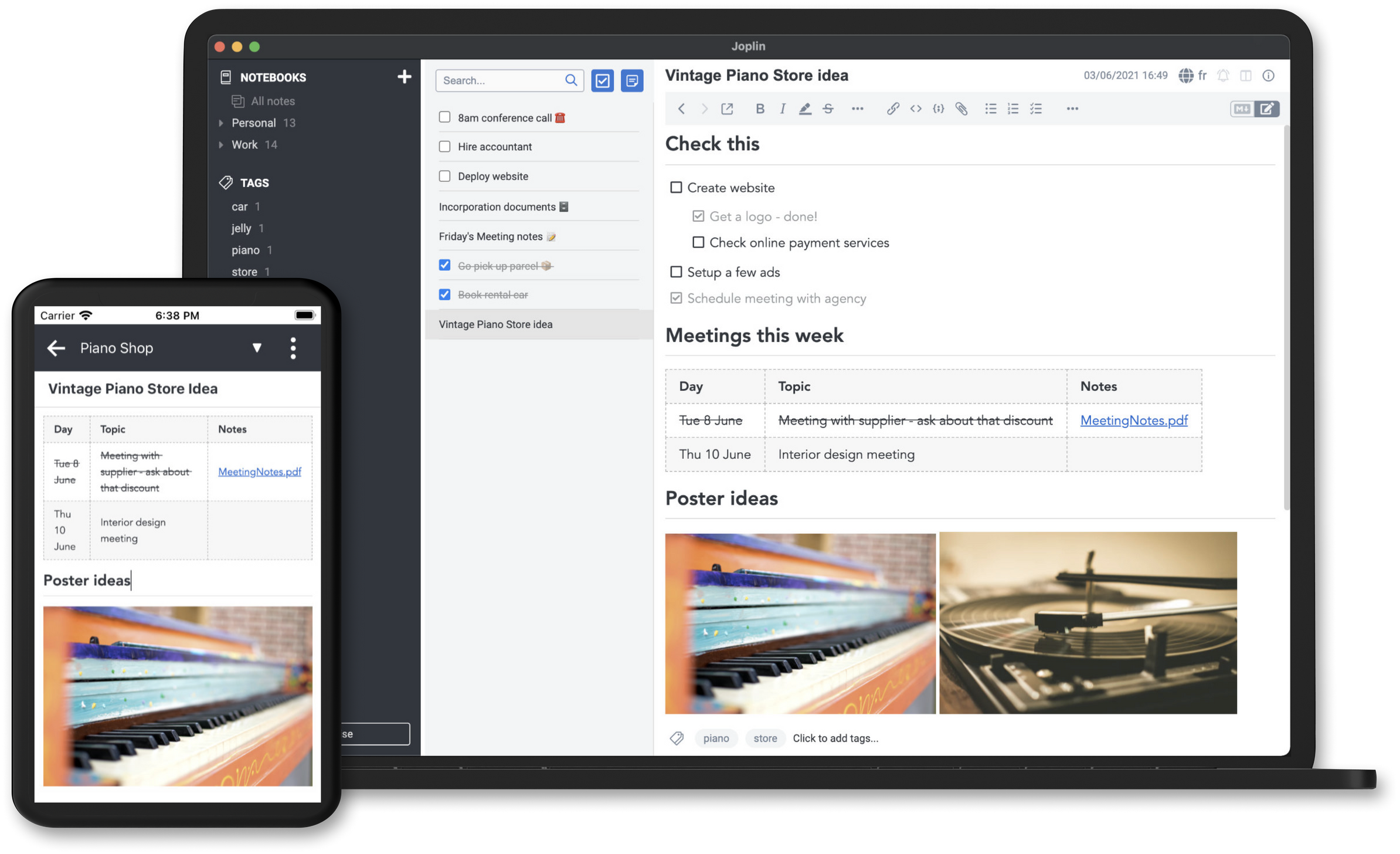
Obsidian + plugins — AI-enhanced, DIY. Obsidian itself is free for personal use with no signup; Sync is $4/month annual or $5 monthly, Publish $8/$10, a Commercial licence $50/user/year, and Catalyst $25 one-time. There is no first-party AI. The ecosystem does the work: Smart Connections (free with local embeddings, or $0.50–$3/day with cloud embeddings) for semantic search and vault chat with citations; Copilot for Obsidian ($20–30/month in typical API usage) for a polished chat sidebar with QA mode; Text Generator ($5–15/month, own API key) for template-driven inline generation; and BMO Chatbot with Ollama for genuinely free, fully offline local models if you have 16GB+ RAM. Strengths: local-first markdown files you own forever, complete model choice, and the only credible fully-private option. Weaknesses, stated bluntly by one 2026 guide: "you become the systems integrator." Running Smart Connections and Copilot together builds duplicate semantic indexes. Initial indexing is slow. Verdict: free core plus one plugin is excellent value for technical users; a non-technical team should not choose this.
Mem — AI-native. Mem shipped Mem 2.0 in early 2026, fixing longstanding performance complaints. Free tier is capped at 25 chats and 25 PDF pages per month; Pro is reported around $12–15/month. Strength: genuinely zero-structure capture — no folders, no tags, AI organises retroactively. Weakness: it is a small vendor in a category the big assistants are absorbing, and "Mem" is routinely confused with Mem0, an unrelated developer memory API. Verdict: interesting, but the free tier is too thin to evaluate properly and the category risk is real.
Readwise (Reader + AI) — AI-enhanced. Readwise Lite $5.59/month billed annually; Readwise Full $9.99/month annual or $12.99 monthly, which is the tier that includes Reader. Free for the first 30 days, with a 50% academic discount on request. The AI layer (Ghostreader) does summarisation, Q&A over saved articles and spaced-repetition generation. Strengths: the highlight-capture-and-resurface loop is unmatched, and Reader is the best read-later app on the market. Weakness: the AI is a genuinely useful accessory rather than the product, and $10/month on top of an assistant subscription is a real ask. Verdict: worth it if you read and highlight heavily; the AI alone is not the reason to buy.
Evernote — AI-enhanced (brief). Under Bending Spoons: Free is now 50 notes, 1 notebook, 1 device, 1GB — effectively a demo. Starter is $99/year (about $8.25/month) with 1,000 notes, 20 notebooks and 3 devices; Advanced is $249.99/year (about $20.83/month) with unlimited notes, notebooks, devices and storage plus AI-Powered Search, Semantic Search, AI Edit and AI Transcribe; Enterprise is custom. Verdict: hard to recommend to new users at $250/year when Notion Business is $192 and Obsidian is free.
Capacities and Tana — AI-native newer entrants (brief). Capacities: Free (5GB then 100MB/month, no AI), Pro $9.99/month or $83.92/year, Believer from $12.49/month, plus an AI Plus add-on at $8.33/month annual for heavy use. Object-based rather than page-based, with a monthly AI budget model. Tana: Free (50 AI queries, 5 hosted meetings with AI transcripts, 1 calendar), Pro $30/month or $20 annual (20x free AI, unlimited hosted meetings, botless meeting agent for Zoom/Teams/Meet), Max $120/$80 annual, Business custom. Tana's supertag data model is the most genuinely novel structure in the category and its meeting agent is strong. Both are small-vendor bets with steep learning curves.
D. Enterprise knowledge search
Glean — AI-native, category leader. Glean does not publish pricing, which is itself the most consistent complaint about it. Third-party and community-reported figures for 2026 put base seats in a $10–$50/user/month range with a median around $50, minimum seat commitments commonly 50–100, and entry-level annual contracts around $60,000 before negotiation. The commercial model is Enterprise Flex Seats plus FlexCredits, a consumption unit for advanced AI features whose dollar value Glean does not publish. Products are Glean Assistant, Glean Agents and Glean Enterprise Context, with 250+ data-source connectors. Strengths: the enterprise knowledge graph and personalised relevance ranking remain best-in-class, and permission-awareness is mature. Weaknesses: pricing opacity, high floor, long deployments, and a genuine dependency on your organisation's content hygiene. Verdict: worth it for 1,000+ seat organisations with sprawling SaaS estates; below a few hundred seats the economics rarely work.
Microsoft 365 Copilot search — AI-enhanced. $30/user/month enterprise list (or $18–25.20 on SMB plans) as an add-on. Permission-aware and native across the M365 ecosystem, but effectively M365-only for connectors. Verdict: if you're all-Microsoft, this is the default and you should not buy Glean until you've proven Copilot insufficient.
Gemini Enterprise (Google) — AI-native. Google's successor to Agentspace, now the umbrella for its enterprise agent and search platform. Published rates: Business from $21/seat/month, Standard and Plus from $30/seat/month, both with 30-day trials; a Pay-as-you-go edition with no per-seat fee requires an invoiced billing account; a Frontline edition requires a minimum of 150 Standard/Plus users. Important constraints: self-serve billing caps at 25 seats through the console, licences are tied to a specific Google Cloud project and location, storage quotas are pooled across the project rather than per user, and Agent Platform consumption is billed separately from seats at Cloud rates. Verdict: the most transparent enterprise pricing in this category, and the obvious choice for Workspace-centric organisations.
Dust — AI-native, mid-market. Dust publishes in euros: Free (500 lifetime credits), Pro €24/seat/month billed yearly or €30 monthly (8,000 credits/seat/month), Max €120/€150 (40,000 credits), Enterprise custom with workspace-pooled credits. Self-serve Business plans cover teams up to 100 people, with up to 3 connectors to 20+ data sources and 5 remote MCP servers; Enterprise unlocks unlimited connectors and MCP servers. Includes 20+ frontier models (GPT, Claude, Gemini, Mistral, DeepSeek), SOC 2 Type II, US/EU data residency and SSO. Verdict: the best option for 20–200 person companies that want Glean-style capability without a Glean-sized contract — the connector cap on Business is the main thing to check before buying.
Others currently notable. GoSearch competes explicitly on transparent pricing and fast (days, not months) deployment with 100+ connectors. Guru leads on knowledge verification and content governance workflows. Elastic remains the developer-controlled option. Coveo and Lucidworks Fusion serve large hybrid lexical/semantic deployments with heavy implementation costs. Moveworks, now inside ServiceNow, is the agentic IT/HR service-desk play rather than general search. Two exits define the market's direction: Dashworks was acquired by HubSpot (July 2025) and Qatalog by ClickUp (early 2026) — enterprise search is becoming a feature of larger suites rather than a standalone category.
E. Document analysis
How the assistants handle PDFs and long documents. Approximate 2026 limits, with the caveat that these change frequently: ChatGPT accepts up to 512MB per file, with roughly 3 files/day on Free, about 80 files per 3 hours and 10 per message on Plus, and effectively unlimited on Pro; supported formats span PDF, DOCX, XLSX, CSV, PPTX, code, JSON, XML and images. Claude caps at 30MB per file with 5 files per chat on Free and 20 on Pro/Max, and gives full analysis of PDFs up to roughly 100 pages — but its 1M-token context on Fable 5.1, Opus 5 and Sonnet 5 means what it does ingest, it reasons over completely. Gemini accepts 100MB (2GB for video), 10 files per prompt, and blocks code and spreadsheet uploads on Free. Perplexity takes roughly 40–50MB with about 3 daily attachments free and unlimited on Pro. Gemini Notebook is the outlier and the best of them for volume: 500,000 words and 200MB per source, 50 to 600 sources per notebook depending on tier.
The practically important distinction is context versus retrieval. ChatGPT and Perplexity chunk and retrieve from large documents, which is fast but means the model may never see a passage that matters. Claude and Gemini increasingly load documents wholly into context, which is slower and more expensive but catches cross-references a retrieval system misses. For contract review, financial filings or anything where a clause on page 180 modifies page 12, the whole-context approach is materially more reliable — and worth paying for.
Two shared weaknesses persist across all of them. Scanned documents and complex tables remain the failure mode: OCR quality on multi-column layouts, merged table cells and handwritten annotations is still poor enough that numbers should be spot-checked, not trusted. And every assistant will confidently summarise a document it only partially ingested without telling you which pages it skipped — if a document is near a tier's page limit, ask the model explicitly what it read.
Dedicated tools. Adobe Acrobat AI Assistant is the notable incumbent play: an add-on at roughly $4.99–$7.99/month for individuals on top of Acrobat Pro at $19.99/month, or $7.50–$12/month per user on top of Acrobat Pro for teams at $23.99, delivering Generative Summary, Generative Q&A and Generative Outline. It is not included in base Acrobat Pro and is unavailable on Acrobat Standard. Its advantage is document fidelity — it understands PDF structure natively rather than as extracted text — and it keeps you inside the tool where the document already lives. Its disadvantage is that the underlying reasoning is weaker than any frontier assistant, and the combined $25–28/month is more than a ChatGPT Plus subscription that does far more. For academic PDFs specifically, Elicit and SciSpace beat both general assistants and Acrobat because they understand citation graphs and methodology sections as structured objects.
AI-native vs AI-enhanced, at a glance
AI-native (the AI is the product, and removing it leaves nothing): ChatGPT, Claude, Gemini, Grok, DeepSeek, Perplexity, Gemini Notebook, Elicit, Glean, Dust, Mem, Gemini Enterprise.
AI-enhanced (a working product that added AI, and would still function without it): Microsoft Copilot across M365, Notion AI, Superhuman Docs (formerly Coda), Obsidian via plugins, Readwise Ghostreader, Evernote, Adobe Acrobat AI Assistant, Capacities, Tana.
The distinction matters commercially: AI-native tools price the AI as the product and their free tiers are deliberately thin, while AI-enhanced tools have mostly stopped charging separately for AI — Notion's spring 2026 add-on retirement and Microsoft's folding of Copilot into M365 Premium are the same move. Expect the remaining separate AI add-ons (Adobe, Capacities) to disappear into base pricing within a year.
One-line verdicts by category
- General assistants: one $20 subscription (ChatGPT Plus, Claude Pro or Google AI Pro) is worth it for nearly every knowledge worker; a second one is worth it only if you have a specific job the first does badly; $100–200 tiers are worth it only for daily agent and deep-research users.
- Search & research: Perplexity Pro at $20 pays for itself for anyone who verifies claims professionally; Gemini Notebook's free tier is the best free product in the category and needs no upgrade.
- Notes & knowledge management: paid tiers are worth it for the non-AI features — Notion for databases, Readwise for the review loop, Obsidian Sync for reliability — and the AI is a bonus, not the purchase justification.
- Enterprise knowledge search: worth it above roughly 500 seats with genuinely fragmented data; below that, Dust or your existing Microsoft/Google licence will get 80% of the value at 10% of the cost.
- Document analysis: your general assistant is almost certainly good enough; buy a dedicated tool only for systematic literature review (Elicit) or high-volume PDF work inside Acrobat.
Sources
- ChatGPT pricing (official)
- ChatGPT Business: General FAQ — OpenAI Help Center
- What is ChatGPT Plus? — OpenAI Help Center
- GPT-6 Astra pricing — eesel AI (8 Sept 2026)
- ChatGPT subscription pricing — AI Pricing Guru (14 Sept 2026)
- Claude pricing (official)
- Claude models overview — Anthropic platform docs
- Claude release notes — Anthropic Help Center
- Google AI subscriptions (official)
- Gemini models — Google DeepMind
- Google Gemini pricing — Costbench (verified 22 Aug 2026)
- Microsoft 365 Premium (official)
- Microsoft 365 Copilot for business (official)
- Microsoft Copilot pricing tiers explained — A Guide to Cloud (16 June 2026)
- xAI API models and pricing
- Grok pricing plans — AI Toolbox (19 Aug 2026)
- Grok pricing — Suprmind (verified 6 July 2026)
- Meta One AI subscription tiers — Creeta (28 May 2026)
- DeepSeek API pricing (official docs)
- Perplexity pricing guide — eesel AI (23 June 2026)
- Perplexity Comet pricing — eesel AI (9 June 2026)
- Upgrade Gemini Notebook — Google Support
- NotebookLM limits 2026 — Gemini Omni Prompts (verified 10 Aug 2026)
- Deep research mode comparison 2026 — Presenc AI (May 2026)
- Elicit pricing (official)
- Notion pricing (official)
- Notion pricing, AI add-on gone — Aumiqx (2026)
- Superhuman Docs billing and pricing basics — Superhuman Help Center
- Coda is now Superhuman Docs — Superhuman blog
- Obsidian pricing (official)
- Complete guide to AI in Obsidian — Eyrie (25 May 2026)
- Mem.ai vs Mem0 — SolidAITech (July 2026)
- Readwise pricing (official)
- Evernote pricing 2026 — eesel AI (24 June 2026)
- Evernote compare plans (official)
- Capacities pricing (official)
- Tana pricing — Costbench (verified 12 July 2026)
- Glean pricing 2026 — Workativ (16 Feb 2026)
- Glean pricing page (official, no public prices)
- Gemini Enterprise pricing — WorkAgent (verified 29 Aug 2026)
- Dust pricing (official)
- Enterprise search software 2026 — GoSearch (updated 25 Aug 2026)
- AI file upload limits compared — OneFile (28 Feb 2026)
- Adobe Acrobat AI pricing — Redress Compliance (29 Dec 2025)
Facts I could NOT verify against a current official source
- ChatGPT Go, Plus and Pro dollar prices. OpenAI's own pricing page renders prices client-side and returned no figures. $8 / $20 / from $100 is corroborated by two independent September 2026 sources and OpenAI's own Plus help article ($20), but the Go and Pro figures are not from an OpenAI page.
- ChatGPT Enterprise pricing. Not published; OpenAI's FAQ confirms it is custom-quoted only.
- Which exact GPT model variants sit on which ChatGPT tier. OpenAI's pricing page says "GPT-6 Astra and GPT-5.6" for Plus; third-party trackers list contradictory variant names (Luna, Terra, Sol). Treat variant-to-tier mapping as unreliable.
- Grok consumer subscription prices. xAI publishes API rates but no consumer pricing page I could reach. SuperGrok Lite $10 / SuperGrok $30 / Heavy $300 / X Premium $8 / Premium+ $40 all come from third-party trackers last verified July–August 2026.
- Meta One Plus ($7.99) and Premium ($19.99). Single secondary source dated May 2026; no Meta page confirmed.
- Superhuman Docs (formerly Coda) per-seat prices. Superhuman's help centre confirms the Free/Pro/Business/Enterprise tier names and per-Doc-Maker model but publishes no figures on the pages I could retrieve.
- Mem Pro price (~$12–15/month). Secondary source only; no Mem pricing page confirmed.
- Glean pricing in full. Glean publishes nothing. The $10–50/user/month range, ~50–100 seat minimums, ~$60k entry point and FlexCredit model are all community/analyst estimates.
- Notion custom-agent credit pricing (~$10 per 1,000 credits). From one secondary source; Notion's pricing page confirms agents exist but not the credit rate.
- Evernote monthly-billing prices. Evernote's compare-plans page shows tier limits but no dollar figures; the $99/$249.99 annual figures come from a June 2026 secondary source.
- Microsoft 365 Copilot $30/user/month enterprise list price. Widely reported and consistent across 2026 sources, but Microsoft's own business page I reached showed $18.00/$25.20 SMB rates instead — the $30 figure may now apply only to specific enterprise agreements.
- File upload limits for all assistants. Best available source is dated 28 February 2026 and refers to "Gemini Advanced," a tier name since replaced by Google AI Pro — so these numbers are likely stale in detail.
- Gemini Notebook's post-2 September 2026 absolute quotas. Google published tier multipliers (1x/2x/4x/5x–20x) but not absolute numbers; the per-day figures quoted are pre-September values.
- Gemini free-tier model naming. Google's subscriptions page says "3.6 Flash" while DeepMind's model pages list 3.8 Flash and 3.5 Flash-Lite. Google's own materials conflict.
- Adobe Acrobat AI Assistant pricing. Best source is dated 29 December 2025 and self-flags that current pricing should be confirmed with Adobe.
- Dust USD pricing. Dust publishes in euros only; no official USD rate card.
Related interface examples
These publisher images illustrate products in this workflow category. They are supplemental to the archived report, not screenshots from our own testing.