Historical source and event dates are not site publication dates. Product plans, policies and availability may have changed since retrieval.
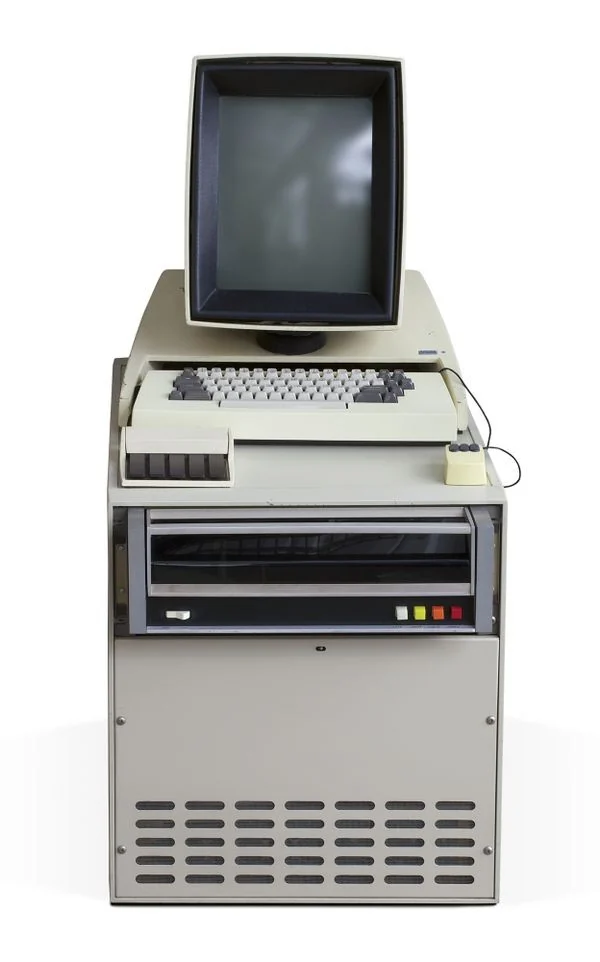
The setup
Bravo was built at Xerox's Palo Alto Research Center, which the lab's own current history page dates to 1970, to run on the Alto, an experimental research computer that combined a bitmapped display, a mouse and networking years before any of those were sold as a commercial package. According to the Computer History Museum's own account of the Alto, PARC combined a graphics-based display and mouse with software presenting a rich interface of windows and icons specifically to make computer use easier for non-specialists, and Bravo was the word processor built to exploit that hardware.
What the documents show
The museum's materials describe Bravo as widely regarded as the first WYSIWYG text editor, meaning a document appeared on screen exactly as it would print, a novelty when most editors displayed unformatted text and control codes rather than a laid-out page. Bravo's WYSIWYG printing and a companion editor, Gypsy, are credited with introducing cut-and-paste editing and point-and-click text selection, approaches the museum ties directly to Alto's graphics display and mouse rather than treating them as independent inventions. Charles Simonyi is named in the museum's materials as the figure most associated with Bravo's WYSIWYG approach.
The friction
Bravo was a research system running on hardware Xerox never sold as originally configured; the museum's own account notes an Alto's component cost alone ran to roughly twelve thousand dollars, with an estimated commercial price near forty thousand had Xerox sold it as a product. Bravo's interface choices, then, were developed and proven on hardware most offices of the era could not have afforded even if it had been for sale, a gap between capability and access the historical record documents plainly.
What changed in the work
What the documents support is a specific origin point for an interaction pattern nearly every writer now takes for granted: that a screen should show the formatted result, not a coded instruction set, and that pointing and clicking should select what gets edited. What they do not support is a claim that Bravo shipped as Xerox's mainstream commercial product in this form; its screen-to-print promise reached the market later, through different Xerox systems and eventually through other companies' word processors entirely. Every current AI drafting feature that edits a visible document, rather than a marked-up file, still operates inside the WYSIWYG assumption Bravo introduced as a research prototype.
- Does a modern editor's what-you-see-is-what-you-get claim hold for every element, tables, footnotes, tracked changes, or only for plain paragraph text?
- What hardware or account tier is quietly required to use a feature marketed as simply "available"?
- Which of today's editing conventions, cut-and-paste chief among them, trace to a specific system rather than being self-evidently the only way to do it?
Bravo's lesson is less about the specific software than about the gap between a research breakthrough and a shipped product: the interface concept was proven years before ordinary offices could obtain hardware capable of running it, a lag worth remembering whenever a new interface idea is announced as though availability and invention happened on the same day.
Sources & verification
Preserved from the earlier archive. These sources have not all been freshly rechecked for this expansion.
- Xerox Alto: Computers for “Regular Folks”Source date: not stated · Retrieved: 2026-09-16
Computer History Museum exhibit materials describing Bravo as the first WYSIWYG text editor, its authorship, and the Alto's development cost.
- Palo Alto Research CenterSource date: not stated · Retrieved: 2026-09-16
PARC's own current history page confirming its 1970 founding by Xerox and its research lineage, used for institutional context.
Continue the workflow
- Build a reusable writing brief before polishing the prompt
A compact, reusable specification for commissioning consistent writing without relying on a clever one-off prompt.
- Review the diff for altered facts, not just improved prose
A practical review pass for comparing document versions and finding factual changes hidden inside editorial revisions.
- Hand off an accessible document with structure intact
A human-centered final check for document structure, descriptive links, image alternatives, and usable delivery across formats.
- Word's Copilot needs a license, a role, and up to a day to appear
Microsoft's own setup documentation, current as of 16 September 2026, lists the licensing, admin roles, and security steps before Copilot appears in Word.