Historical source and event dates are not site publication dates. Product plans, policies and availability may have changed since retrieval.
The setup
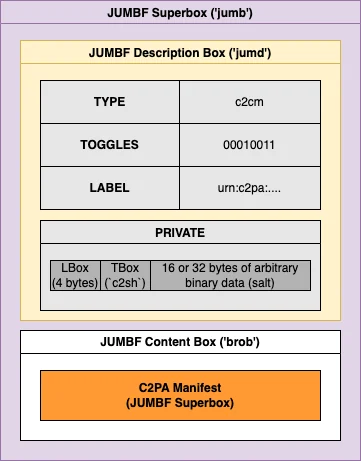
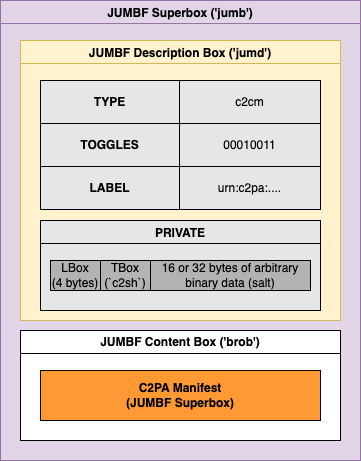
The Coalition for Content Provenance and Authenticity, a group whose steering members include Adobe, Microsoft, Intel, the BBC, Google, Meta, OpenAI, and Amazon among more than 500 listed companies, maintains a technical specification for attaching provenance data to a media file. That specification, currently at version 2.1 and read on 16 September 2026 at spec.c2pa.org, defines a "manifest" as the set of information about an asset's provenance built from one or more "assertions": discrete statements either made by a signer or gathered automatically when the manifest is created.
What the documents show
The spec lists concrete assertion types an implementer can record, including actions such as c2pa.created, c2pa.edited, and c2pa.watermarked, alongside a separate informative document on guidance for artificial-intelligence and machine-learning tools. Critically, the specification states its own scope limit directly: C2PA specifications "SHOULD NOT provide value judgments about whether a given set of provenance data is 'good' or 'bad,' merely whether the assertions included within can be validated as associated with the underlying asset, correctly formed, and free from tampering." The consumer-facing Content Credentials site, run by the same coalition, describes the visible result as a pin that lets a viewer "determine the method of creation and see a record of editing history," a plainer description of the same underlying manifest.
The friction
The friction is built into the specification's own wording: validating a credential proves the assertions are intact and bound to the file, not that whoever wrote them was honest. A manifest can be correctly signed and still contain a false claim about how an image was made, because the spec explicitly declines to judge the truth of the content, only its structural integrity. The Content Credentials site frames the tool's purpose narrowly too, aiming "to provide good actors with a way to demonstrate the authenticity of their content" while acknowledging that people who want to deceive can simply not attach a credential, or strip one, at all.
What changed in the work
For someone evaluating an image or document, the editorial change is modest but real: a present, valid credential adds a checkable process record where none existed before, but its absence proves nothing, and its presence proves only that a claim was formed and left untampered, not that the claim is accurate. Treating a credential as proof of truth would be reading more into the specification than the coalition itself claims.
- Does the tool you use attach a credential automatically, or does someone have to enable it?
- What happens in your workflow when a file arrives with no credential at all?
- Which assertion types, such as created, edited, or AI-generated, does your organization actually check before trusting a file?
A content credential is evidence of a process, on the specification's own terms, not a verdict on the content itself.
Sources & verification
Preserved from the earlier archive. These sources have not all been freshly rechecked for this expansion.
- C2PA Technical Specification 2.1Source date: not stated · Retrieved: 2026-09-16
Formal definitions of manifest and assertion, assertion action types, and the spec's stated limit on judging truth versus structural validity.
- Content CredentialsSource date: not stated · Retrieved: 2026-09-16
Consumer-facing description of the credential pin, coalition membership, and the stated purpose of helping good actors demonstrate authenticity.
Continue the workflow
- Build a reusable writing brief before polishing the prompt
A compact, reusable specification for commissioning consistent writing without relying on a clever one-off prompt.
- Review the diff for altered facts, not just improved prose
A practical review pass for comparing document versions and finding factual changes hidden inside editorial revisions.
- Hand off an accessible document with structure intact
A human-centered final check for document structure, descriptive links, image alternatives, and usable delivery across formats.
- Adobe says Acrobat's AI Assistant never trains on your PDF
Adobe's own product and legal pages, read on 16 September 2026, describe Acrobat's AI Assistant and disclose that prompts may still be reviewed for abuse.